
-
By Admin
-
February 24, 2026
- 0 Comment
Gabion vs Concrete Retaining Wall: Cost and Durability Comparison.
Retaining walls are a crucial element that are used in landscaping and construction to keep soil in place to stop erosion and stabilize slopes. They are extensively utilized in infrastructure projects like railways, highways rivers, riverbanks, as well as residential developments. When deciding on the appropriate kind of retaining wall contractors and engineers often look at two options that are commonly used gabion retaining walls as well as cement retaining walls.
Both systems offer advantages based on the requirements of the project in terms of environmental conditions, project requirements, and budget. In recent times gabion walls have been gaining popularity because of their flexibility as well as their natural drainage capabilities and their cost-effectiveness.
In numerous landscaping and infrastructure projects, especially gabion wall retaining walls India applications and gabion structures, they are becoming sought-after as an alternative to concrete walls. Knowing the difference in price and durability as well as efficiency can assist project managers determine the most appropriate option.
Understanding Gabion Retaining Walls
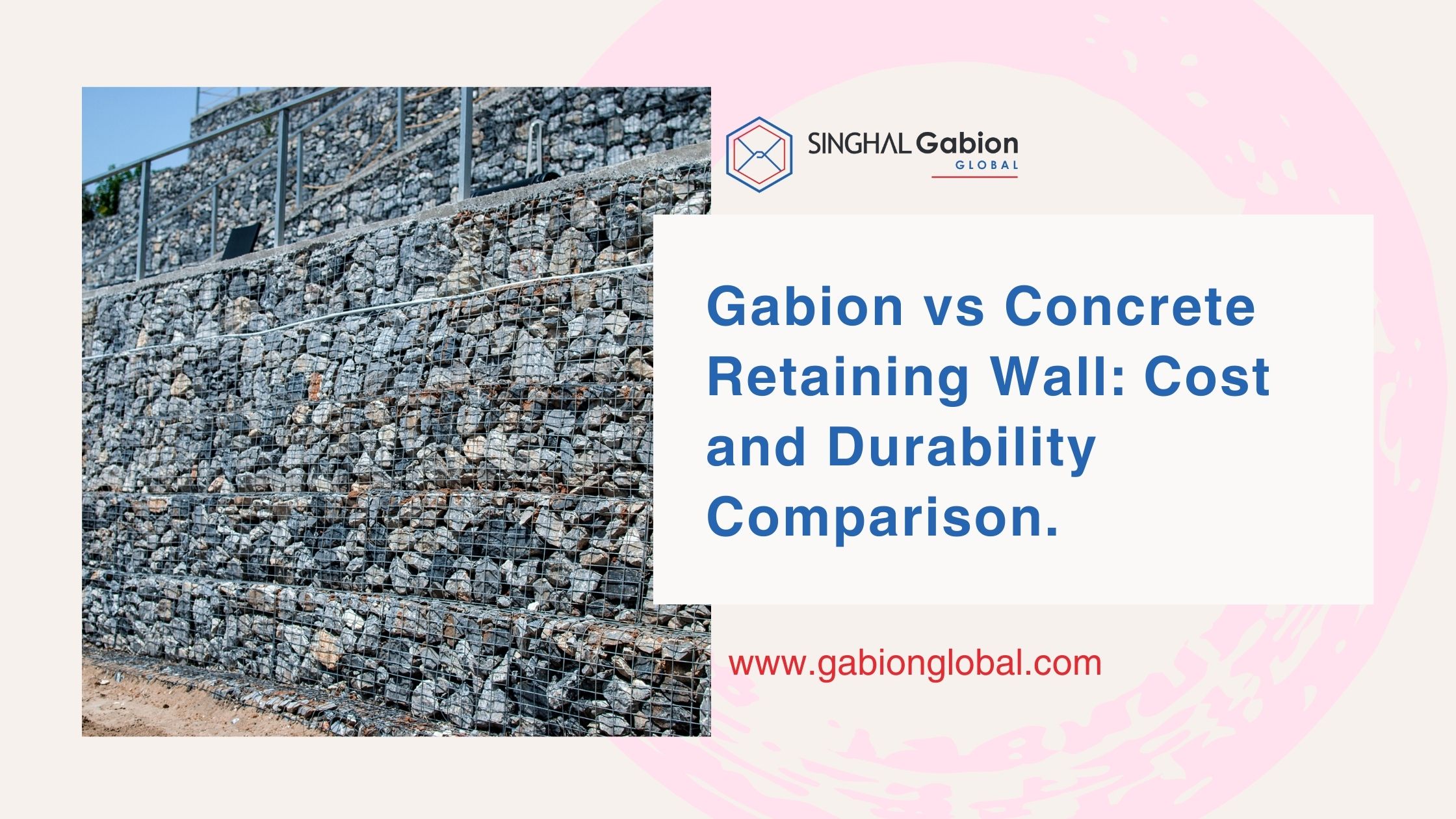
Gabion walls are constructed with wire mesh and baskets that are filled with stones from nature. The baskets are then stacked and connected to create an extremely strong structure for retaining. The design lets water flow through the stones while firmly securing soil in the correct position.
One of the most significant benefits of gabion walls is their ability to move. Contrary to concrete constructions gabions permit natural drainage. This helps to stop the pressure of water from accumulating within the walls.
Another crucial aspect is their aesthetic importance in aesthetics. A well-planned stone gabion design will blend seamlessly with the surrounding landscapes and make gabion structures a popular choice in civil engineering and landscaping projects.
Gabion walls are typically used to stabilize slopes as well as riverbank protection. erosion control wall in areas that are exposed to environmental and water flow stress.
Understanding Concrete Retaining Walls
Retention walls made of concrete are strong structures constructed using cement blocks that are reinforced or pouring concrete. They are constructed to hold huge amounts of soil. They are typically employed as part of urban building projects where a high capacity for load bearing is needed.
Concrete walls provide a sturdy structural support and are commonly used in commercial structures highways, bridges, and abutments. Because they are solid structures they don’t permit water to flow through them naturally.
It is important to install additional drainage systems, such as drainage pipes or weep holes are required to be installed in order to prevent pressure from hydrostatically accumulating in the walls behind them.
Although concrete walls can be extremely strong however, they are also robust and can crack as time passes if the soil moves or gets settled.
Cost Comparison: Gabion vs Concrete Walls
Cost is among the main factors to consider when selecting a wall retaining system.
The walls of gabion are generally more affordable than concrete walls. The materials used to construct gabions – wire mesh and natural stones — are often local, which reduces transport and material costs.
In addition, gabion structures require less skilled workers to install them. The baskets are constructed on site and filled with stone which makes construction quicker and less complicated.
Concrete walls for retaining, however are more expensive in terms of materials and cost of labor. The process involves formwork as well as cement mixing as well as curing. Specialized equipment and skilled labor are also needed.
In a variety of gabion wall retaining walls India projects the choice of gabions is due to their ability to strike the best balance of affordability as well as structural efficiency.
Durability and Structural Performance
Both concrete and gabion walls are built to offer long-term structural stability however their longevity is contingent on the conditions in which they are installed and their quality.
Gabion walls are a flexible structure which can adapt to minor ground movements, without cracking. This makes them ideal for areas of unstable soil as well as seismic activity.
The wire mesh that is used in gabions is typically coated with PVC or galvanized to protect against corrosion, which allows this structure to endure many decades.
Concrete retaining walls are sturdy, yet they are extremely they are also extremely rigid. If the soil shifts or the foundation is not settled evenly cracks could appear within the concrete. As time passes cracks can weaken the strength and strength of the walls.
In projects that involve erosion control, gabion walls are usually preferred since they can handle the effects of water and environmental change more efficiently.
Drainage and Water Management
The proper drainage is crucial for any retaining wall.
Gabion walls naturally permit for water flow to pass through baskets of stone which prevents pressure build-up in the area behind it. This makes them extremely efficient for protecting riverbanks along with canal lining, as well as slope stabilization.
Concrete retaining walls need additional drainage systems in order to handle the pressure of water. If they are not properly drained the hydrostatic pressure could make the walls weaker and result in structural damage in the course of time.
Due to their drainage characteristics gabion structures are extensively used in projects that involve erosion control and flow of water.
Environmental and Aesthetic Considerations
Modern construction projects are increasingly focused on sustainability and integration with the environment. Gabion walls have several advantages for the environment compared to concrete structures.
A well-planned Stone gabion walls will blend seamlessly into natural landscapes, which makes it ideal for gardens, parks, and urban landscaping projects.
In time, plants can develop in between stones giving them a an organic appearance and improving the ecological balance.
Concrete walls for retaining, though useful, can appear stiff and industrial. They might require an additional coating or cladding to increase their aesthetic appeal.
If you are working on projects that impact the environment gabions are a more organic and sustainable solution.
Maintenance Requirements
Gabion walls are typically in need of little maintenance. periodic inspections may be required to determine if the wire is damaged or stones that have been moved, however the overall cost of maintenance is low.
Since gabions are a flexible structure small ground movement typically doesn’t affect their performance.
Concrete walls might require repairs in the event that cracks start to form as time passes. Repairs can include closing cracks, strengthening damaged areas, or re-installing portions of the walls.
In the long run the cost of maintaining concrete walls can be higher than gabion systems.
Applications of Gabion Retaining Walls
Gabion retaining walls are extensively utilized in many landscaping and infrastructure projects.
They are typically used in railway and highway embankments as well as riverbank protection work, canal revetments and projects for hillside stabilization.
They are also available in contemporary landscape architecture, where designers design appealing stone gabion walls elements for parks, gardens and commercial buildings.
Their capacity to provide solid structural support, while also preventing erosion makes them suitable to be used for wall structures to control erosion in areas where there is flood waters.
FAQs
Q1. How can you tell the difference between gabion retention wall and the concrete wall for retaining?
A gabion wall retaining structure is composed of wire mesh baskets that are filled with stones, which allows natural drainage and elasticity. A retaining wall made of concrete is a sturdy structure that offers solid support, but it requires drainage systems.
Q2. Are gabion walls less expensive in comparison to concrete walls?
In most cases, gabion walls are cost-effective since they make use of locally available stone and need less effort when compared with concrete building.
Q3. Where are gabion walls most often found in India?
Gabion wall retaining India project are extensively employed in railways, highways as well as canal revetments, riverbank protection and hillside stabilization work.
Q4. How do you define a stone wall?
The stone gabion design wall is the retaining wall or decorative wall made of gabion baskets that are filled with stones. These walls offer structural support as well as natural aesthetic.
Q5. Why do gabion walls get being used to stop erosion?
Gabion wall for erosion control are efficient because they let water flow through the rocks while stabilizing the soil and stopping erosion of the surface.
How long will gabion walls for retaining last?
Retention walls of high-quality constructed with PVC or galvanized mesh will last for 30-50 years or longer subject to the environmental conditions and care.
Conclusion
Both concrete and gabion walls offer advantages based on the needs of the project. Concrete walls offer strong structural support for loads, but they need proper drainage systems and can crack over time due to movement of the ground.
Gabion walls have a number of advantages, including low construction costs natural drainage, environmental compatibility and the ability to be flexible. These characteristics make them ideal for construction and erosion control projects.
In a variety of gabion-based retaining walls India applications the gabions have proven to be a solid and affordable alternative to conventional concrete structures.
Through careful evaluation of project parameters like soil stability, flows of water and other design specifications engineers can choose the best option for retaining wall construction to ensure long-term durability.