
-
By Admin
-
February 24, 2026
- 0 Comment
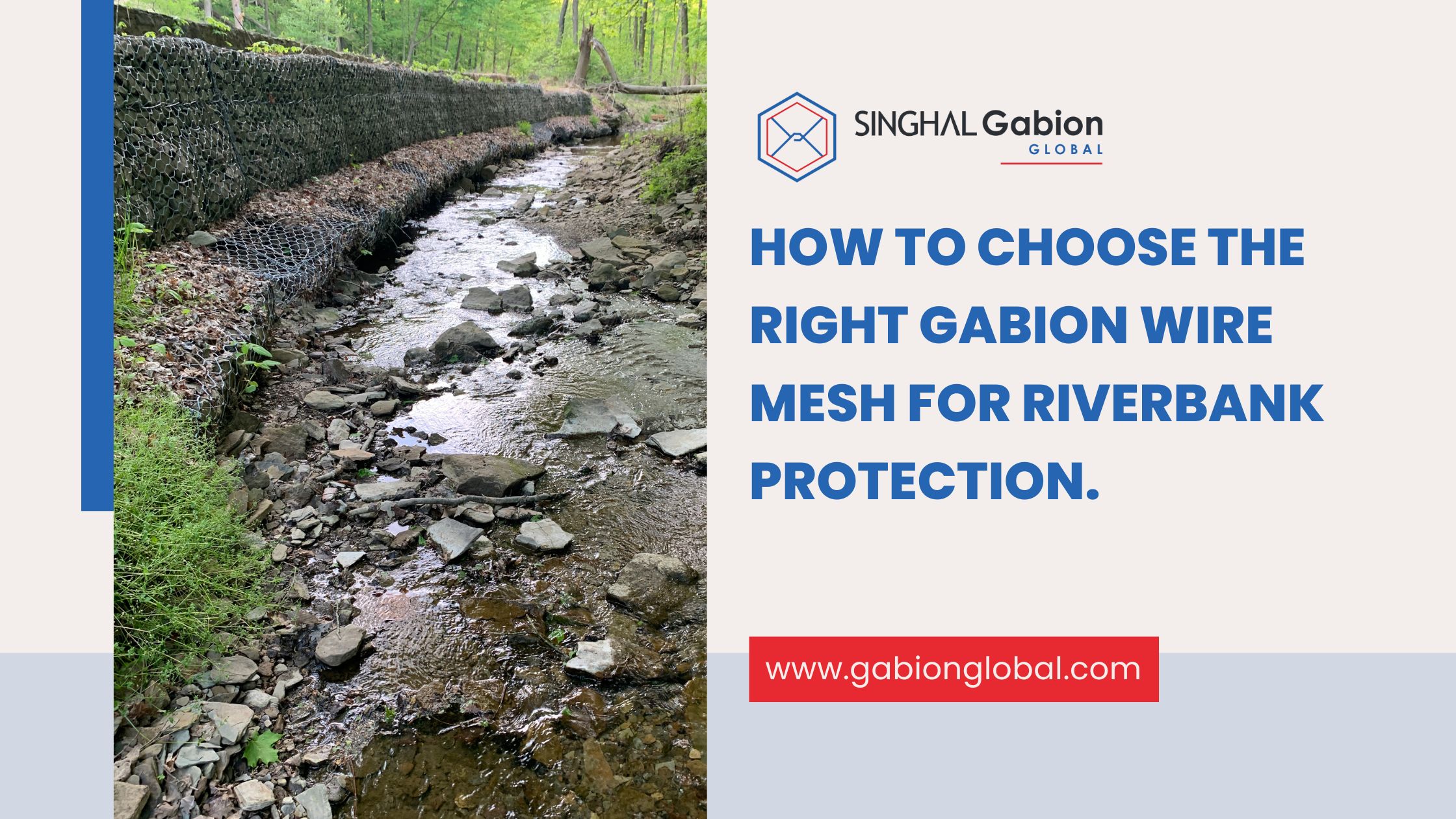
How to Choose the Right Gabion Wire Mesh for Riverbank Protection.
The erosion of riverbanks is a major issue in many regions particularly in areas that are subject to high rainfall, powerful water currents and the seasonal flooding. If the riverbanks are not properly protected, they are prone to collapse and lead to loss of land destruction to infrastructure, land loss, along with environmental destruction. A one of the most efficient solutions in the modern hydraulic engineering process is the gabion system.
Gabion structures constructed of high-end wire mesh baskets stuffed with stones are used extensively to protect riverbanks around all over the world. They are a reliable erosion prevention, natural drains as well as long-term durability. However, the efficiency of a structure made of gabion depends on the choice of Gabion mesh.
Selecting the right type of gabion wire mesh guarantees that the structure will be able to withstand pressure from water as well as resist corrosion and offer long-term durability under harsh conditions. This article we’ll look at the main factors to consider when selecting a gabion wire mesh for projects that protect the riverbank.
Understanding Gabion Wire Mesh
Gabion wire mesh can be described as a special steel mesh designed for the production of gabion baskets as well as mattresses. The baskets are filled with stones and positioned on the banks of rivers to strengthen the soil and safeguard your shoreline against erosion.
The mesh is made using steel wire with low carbon and is coated in protective layer like galvanization or PVC coatings to stop corrosion. The wire is weaved in a double-twisted hexagonal design that gives the strength, flexibility, as well as resistance against unraveling.
This lets gabion baskets maintain stability even when subjected to the most intense soil pressure and hydraulic forces.
Importance of Choosing the Right Mesh for Riverbank Protection
Riverbanks are continuously exposed to water, moisture water, and shifting soil conditions. In the event that the Gabion Mesh isn’t robust enough or resistant to corrosion the structure could be damaged as time passes.
The right choice of gabion mesh will ensure:
The structure has a long service life. structure
Resistance to water damage and corrosion
The ability to stand up to powerful flow of water
Stabilization of soil and drainage
Costs of maintenance reduced
A properly designed gabion system can safeguard riverbanks for a long time while ensuring the structural stability and environmental compatibility.
Types of Gabion Wire Mesh Used in Riverbank Protection
Galvanized Gabion Wire Mesh
The galvanized gabion wire mesh among the most frequently utilized materials to control erosion and stabilization of riverbanks. It is produced using steel wire that is coated with an extremely thick coat of zinc.
The zinc coating helps protect this steel mesh from corrosion as well as environmental damages, which makes it suitable for outdoor use. Galvanized mesh is commonly employed in standard riverbank safety projects in which the environmental conditions are not very abrasive.
PVC-Coated Gabion Mesh
PVC-coated gabion mesh offers additional protection from corrosion. For this kind of mesh the wire made of steel galvanized, and then covered with the polyvinyl chloride (PVC).
The extra coating shields the wire from chemical attack, saltwater and highly acidic environments. Gabion mesh coated with PVC is suggested for areas near the coast, areas with polluted rivers, as well as areas that have high humidity.
Welded Gabion Mesh
Welded gabion is produced through welding wires of steel at the intersections to create a strong grid pattern. It provides sturdy structural support and a neat appearance, it’s more frequently used in applications for landscaping and architecture instead of hydraulic construction.
For protection of riverbanks Double-twisted hexagonal gabion mesh is generally preferred due to its elasticity and adaptability to changes in the ground.
Key Factors to Consider When Choosing Gabion Wire Mesh
Wire Diameter
The size of the wire that is used in gabion mesh is a factor in how strong the mesh is. The wires with a greater diameter offer better tension strength and a better durability against deformation.
For projects to protect riverbanks, the diameter of wires can vary between 2.2 millimeters up to 3.5 millimeters, based on the specifications for the project and the flow conditions.
Mesh Opening Size
Mesh opening size is the measurement of hexagonal openings that are in Gabion Mesh. The most common sizes are:
- 60 mm x 80 mm
- 80 mm x 100 mm
- 100 mm x 120 mm
The selection of mesh openings is contingent on the dimension of the stones that are that are used for filling the baskets of gabion. The stones should be bigger that the openings in mesh so as to stop the stones from falling through.
Corrosion Protection
Because riverbank structures are exposed to water for extended periods of time, protecting against corrosion is vital. A high-end galvanized coating or PVC coating can help extend the life for the gabion net.
In areas of heavy concentrations of industrial pollutants or salinity PVC-coated gabion is generally advised.
Strength and Flexibility
The banks of rivers often see the movement of soil and hydraulic pressure. Gabion mesh should be flexible enough to adjust the changes in conditions without breaking.
Double twisted hexagonal meshes are popular because it stops unraveling even when one wire is damaged.
Stone Filling Compatibility
The gabion mesh should match the kind and size of stones that are used for filling. Stones must be tough sturdy, long-lasting, and resisting weathering. Common stones include basalt, granite, and limestone.
The correct stone filling is essential to ensure that the structure of the gabion stays solid and offers an effective erosion control.
Benefits of Using the Right Gabion Mesh for Riverbanks
The selection of the right gabion mesh can provide several advantages in project protection of the riverbank.
Effective Erosion Control
The stone-filled structures absorb the force of water flowing and stop erosion of the soil along the riverbank.
Improved Drainage
Gabion walls permit water to traverse the stones to reduce hydrostatic pressure, as well as improving the structural stability.
Long-Term Durability
Quality gabion mesh that is properly coating will last for many years in outdoor environments.
Adaptability to Ground Movement
Gabion structures are able to adjust to the soil’s settlement and ground movement without breaking or collapsing.
Environmentally Friendly Solution
As time passes, vegetation will be established within the gabion structures providing a natural, long-lasting riverbank protection.
Common Applications in River Engineering
Wire mesh from Gabion is extensively employed in numerous water management and river projects It is used in many water management projects, such as:
Riverbank stabilization
Lining of canals and protection
Structures for flood control
Bridge abutment protection
Reinforcement of spillway and dam
Shoreline erosion control
These applications show the versatility and efficiency of the gabion system within hydraulic engineering.
Conclusion
Selecting the best gabion wire mesh is an essential aspect in designing efficient flood protection strategies. The factors like the wire’s diameter as well as mesh size, corrosion protection and structural flexibility are crucial in the long-term durability of your system.
Gabion made of high-end galvanized or PVC coated mesh offers a strong resistance to soil pressure and environmental conditions. When coupled with the right stones and a professional installation gabion structures offer reliable erosion control and stabilization of riverbanks for decades.